
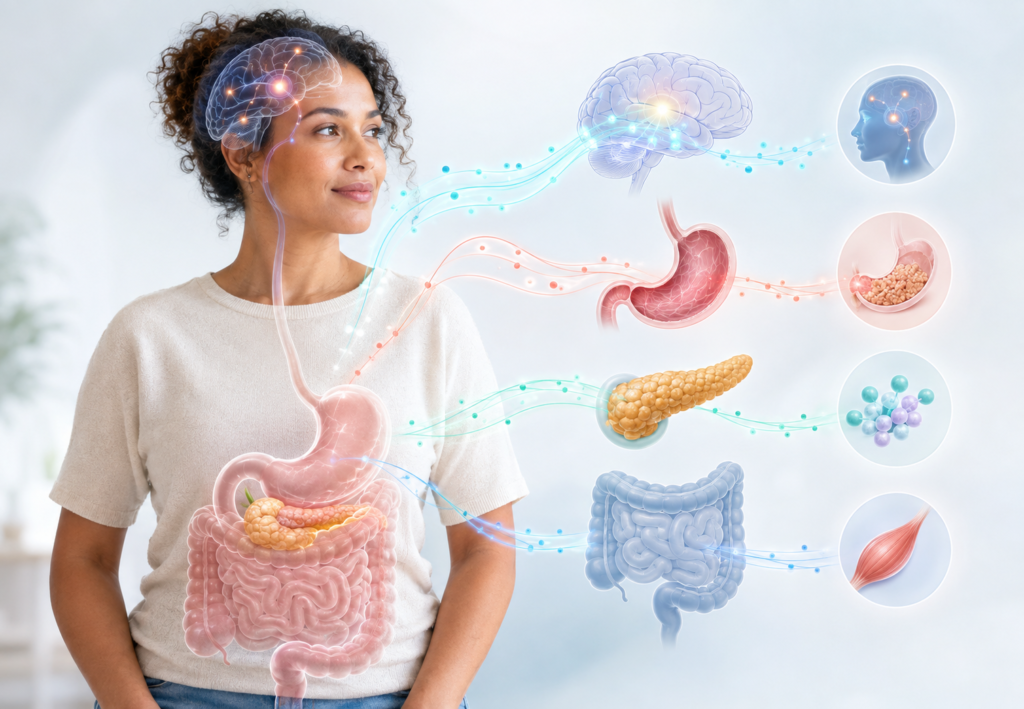
Appetite is not controlled by willpower alone. The body uses a complex network of hormones to communicate between the digestive system, brain, pancreas, and other organs. Two important hormones within this network are GLP-1 and GIP.
Both hormones are naturally released after eating. They help the body respond to food by supporting insulin release, managing post-meal blood sugar, and influencing how nutrients are processed. They may also affect hunger, fullness, and overall energy balance.
What Are GLP-1 and GIP?
GLP-1 stands for glucagon-like peptide-1, while GIP stands for glucose-dependent insulinotropic polypeptide. Both belong to a group called incretin hormones.
The intestines release incretin hormones when food enters the digestive system. They signal the pancreas and other parts of the body that nutrients are arriving and need to be processed.
Although GLP-1 and GIP have overlapping functions, they do not work in exactly the same way.
| Feature | GLP-1 | GIP |
| Full name | Glucagon-like peptide-1 | Glucose-dependent insulinotropic polypeptide |
| Where it is produced | Specialized cells in the intestines | Specialized cells in the upper small intestine |
| When it is released | Primarily after eating | Primarily after eating |
| Main metabolic role | Supports insulin release and post-meal glucose regulation | Supports glucose-dependent insulin release and nutrient processing |
| Effect on digestion | Can slow gastric emptying | Has a more limited role in slowing digestion |
| Connection to appetite | Supports fullness and may reduce hunger | May influence appetite through metabolic and brain-related pathways |
| Other areas of interest | Glucagon regulation and brain signaling | Fat tissue, energy storage, and energy balance |
How GLP-1 Affects Appetite
GLP-1 communicates with areas of the brain involved in hunger, fullness, food-related rewards, and eating behavior. These signals can help the brain recognize that the body has received enough food.
GLP-1 may influence appetite in several ways:
- It sends signals associated with fullness to the brain.
- It may help a person feel satisfied after eating a smaller portion.
- It can reduce interest in additional food after a meal.
- It may influence the brain’s response to food-related rewards.
- It can slow the movement of food from the stomach into the small intestine.
This last process is known as gastric emptying. When food leaves the stomach more slowly, the feeling of fullness may last longer. However, individual responses can vary depending on health, meal composition, medications, and other biological factors.
How GIP Affects Appetite
GIP was traditionally associated mainly with insulin release and nutrient storage. Researchers are now examining its possible effects on appetite, the brain, fat tissue, and long-term energy balance.
GIP receptors are found in several parts of the body. Their presence suggests that GIP may influence more than blood sugar alone. It may participate in communication between the digestive system and brain, potentially affecting how the body responds to food.
The relationship between GIP and appetite is complex. It should not be described simply as either a hunger hormone or a fullness hormone. Its effects may depend on:
- The body’s metabolic condition
- The nutrients included in a meal
- Activity in the brain and nervous system
- Interactions with GLP-1 and other hormones
- Individual differences in hormone response
Scientists continue to study how GIP-related signals may affect eating behavior when they work alongside GLP-1 pathways.
How GLP-1 and GIP Support Blood Sugar Regulation
After a person eats carbohydrates, the digestive system breaks them down into glucose. This glucose enters the bloodstream, causing blood sugar levels to rise.
GLP-1 and GIP respond to this change by signaling the pancreas to release insulin. Insulin helps move glucose from the bloodstream into cells, where it can be used immediately or stored for later.
Their role in this process includes:
- Food enters the digestive system.
- The intestines release GLP-1 and GIP.
- Glucose begins entering the bloodstream.
- The hormones signal the pancreas to release insulin.
- Insulin helps the body use or store glucose.
Their insulin-related effects are glucose-dependent. In simple terms, their activity changes according to the amount of glucose present in the bloodstream.
GLP-1 can also reduce the release of glucagon when blood sugar is elevated. Glucagon is a hormone that signals the liver to release stored glucose. This coordinated activity helps the body manage normal changes in blood sugar after eating.
How Do GLP-1 and GIP Affect Metabolism?
Metabolism is often described as the speed at which the body burns calories, but it includes much more. It covers all the processes the body uses to convert food into energy, maintain tissues, store nutrients, and support essential functions.
GLP-1 and GIP may affect metabolism by influencing:
- Insulin release after meals
- Blood sugar use and storage
- The speed of digestion
- Hunger and fullness signals
- Nutrient processing
- How the body stores fat
- Overall energy balance
It is more accurate to say that these hormones help coordinate metabolism than to claim that they simply make metabolism faster.
Why GLP-1 and GIP Work Better as Part of a System
No single hormone completely controls appetite or body weight. GLP-1 and GIP interact with several other hormones, nerves, organs, and environmental factors.
A person’s appetite may also be influenced by:
- Sleep quality
- Stress levels
- Physical activity
- Meal timing
- Food composition
- Certain health conditions
- Current medications
- Emotional and social factors
This is why hunger levels and metabolic responses can differ greatly from one person to another even when people eat similar meals.
Natural Hormones and Hormone-Based Treatments
Natural GLP-1 and GIP are produced by the body and broken down relatively quickly. Certain prescription treatments are designed to activate GLP-1 receptors, GIP receptors, or both for a longer period.
These treatments are not identical to the hormones naturally released after eating. Individual responses, potential side effects, dosing needs, and treatment eligibility can vary.
Before beginning treatment, a licensed provider should review factors such as:
- Medical history
- Current medications
- Previous treatments
- Personal health goals
- Potential benefits and risks
The licensed provider can then determine whether a particular treatment may be appropriate and provide ongoing guidance.
The Bottom Line
GLP-1 and GIP are natural incretin hormones that help the body respond to food. Both support glucose-dependent insulin release, but each has distinct effects.
GLP-1 is closely connected to fullness, gastric emptying, insulin release, and post-meal glucose management. GIP is involved in insulin release, nutrient processing, energy storage, and potentially appetite-related signaling.
Together, these hormones demonstrate that appetite and metabolism are influenced by biology not willpower alone. Understanding their roles can help people have more informed conversations with a licensed provider about metabolic health and available treatment options.
Disclaimer: This article is intended for general educational purposes only. It does not provide medical advice, diagnosis, or treatment. Consult a licensed provider before beginning, stopping, or changing any treatment.
What Our Patients Say
Discover how our patients describe their experiences with us — from accessing care and connecting with our team to receiving thoughtful guidance and feeling supported throughout their personal health and wellness journey.


Leave a Reply